
by Nobody+1
(an interview with a data vampire)
tell me more about this Wired Magazine article: “Bose Brought Back Wired Headphones, and Teens Are to Thank”
Opting out of the hyper-connected, algorithmically optimized modern tech landscape
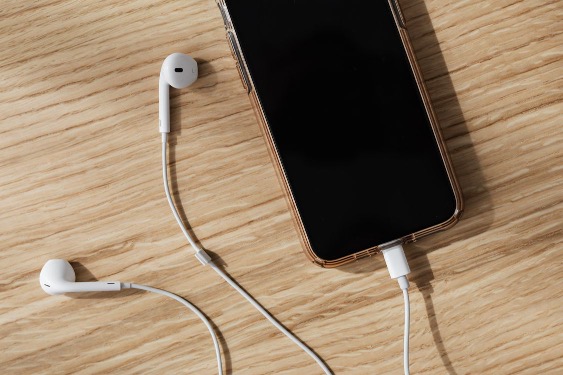
Bose has released its first wired headphones since 2015, the $99 Noise Cancelling Wired Earbuds, to capitalize on a growing trend among Gen Z and Gen A favoring wired audio. The resurgence is driven by youth culture seeking an “offline aura” that signals detachment from constant digital notifications. Read the full piece at WIRED. [1, 2, 3]
tell me more about that “offline aura”
The “offline aura” is a cultural aesthetic and social statement popular among Gen Z and Gen Alpha that uses older, analog technology to signal a intentional detachment from the constant digital grind. As wireless earbuds became the default, visible wires transformed into a deliberate fashion choice and a symbol of tech minimalism. [1, 2, 3, 4]
The concept breaks down into a few distinct cultural layers:
- The Anti-Notification Signal: Wearing wireless earbuds implies you are permanently connected to a smartphone, ready to take a call, or passively receiving notification pings. A visible cord physically tethers you strictly to your media, sending a clear visual cue to the outside world: “I am plugged into my music, not doom-scrolling TikTok or available to the internet”. [1]
- Rejection of “Feature Creep”: Younger generations are experiencing fatigue from devices that require constant software updates, device pairing, and battery charging. The wire represents a “dumb” device that does exactly one thing without a data-harvesting app or a notification funnel attached to it. [1, 2, 3]
- The “Cool-to-be-Unplugged” Aesthetic: Much like the massive spikes in sales for Y2K-era point-and-shoot digital cameras, record players, and flip phones, the corded headphone has been embraced by “It-girls” and internet subcultures. It projects an air of effortless, analog coolness—the vibe of someone who exists in the real world rather than an algorithmic feed. [1, 2, 3, 4]
Essentially, it is a micro-rebellion against modern tech ubiquity. It turns an outdated limitation—the cord—into a highly desirable badge of mental privacy. [1, 2]
Are you interested in how this “offline aura” manifests in other retro tech trends, or would you like to see how the new Bose Wired Earbuds stack up against classic options like Apple EarPods?
yes, how does this “offline aura” manifest in other retro tech trends
The “offline aura” is not exclusive to wired headphones. It has fueled a massive resurgence across several categories of “obsolete” technology. By adopting these devices, younger generations are opting out of the hyper-connected, algorithmically optimized modern tech landscape. [1]
The aesthetic manifests across several prominent retro tech trends:
📸 Y2K-Era Point-and-Shoot Cameras
Instead of using smartphones with advanced computational photography, young people are buying early-2000s digital cameras. [1]
- The Manifestation: Using a separate device that cannot connect to the internet, upload directly to Instagram, or receive text messages.
- The Aura: The physical act of taking a photo requires carrying a dedicated object. The resulting photos have a distinct, low-resolution, grainy imperfection that feels “authentic” compared to the sanitized, AI-sharpened images produced by modern smartphones. It allows the user to capture memories without immediately entering the social media cycle. [1, 2]
📟 Dumbphones and Flip Phones
The “dumbphone” movement involves replacing high-end smartphones with basic flip phones or text-and-talk-only devices.
- The Manifestation: Carrying a phone that lacks an app store, high-speed browsers, or push notifications.
- The Aura: It represents an absolute boundary. If someone wants to reach you, they must call or send a basic SMS. It visually communicates that the user is intentionally inaccessible to the constant stream of emails, Slack pings, and algorithmic feeds, clawing back control over their attention span.
📼 Analog Media: Vinyl, Cassettes, and VHS
Streaming services offer instant access to millions of songs and movies, but the offline aura relies on the friction of physical media. [1]
- The Manifestation: Buying vinyl records, audio cassettes, or even VHS tapes.
- The Aura: This trend is about un-optimizing the media experience. To listen to a song, you have to physically pull a record from a sleeve, place the needle, and listen to the album in the order the artist intended. There are no algorithmic recommendations, skipping songs is difficult, and your listening data isn’t being tracked by a corporate dashboard. [1]
✍️ E-Inkers and Dedicated Word Processors
The desire to disconnect has also hit productivity. Devices like the Astrohaus Freewrite (a digital typewriter) or minimalist e-ink tablets have become highly aesthetic status symbols.
- The Manifestation: Writing or reading on a screen that cannot open a browser tab, play a video, or show a notification badge.
- The Aura: It turns tech back into a single-use tool rather than an omniscient portal. It provides a visual statement that the user values uninterrupted focus, signaling a refusal to participate in the attention economy.
Ultimately, these trends are tied together by a shared desire for tactility, friction, and boundaries. In a world where technology is invisible and omnipresent, making technology visible, physical, and limited is the ultimate counter-culture statement. [1]
Would you like to explore specific brands capitalizing on this trend—like Astrohaus or Fujifilm—or look into the online communities where these retro tech aesthetics are actively romanticized? [1]
i’ve read and written about the interplay of friction and happiness (sans cosmic concierge); tell me more about friction as a counter-culture statement, rather than nostalgic attachment.
To move entirely past nostalgia, we have to look at friction as an act of political and psychological sabotage against the prevailing tech paradigm. In a hyper-capitalist digital economy, friction is no longer a design flaw to be engineered away; it is a radical reclamation of human agency.
When “frictionlessness” becomes an ideology of control, introducing friction back into your life transforms from a cozy retro hobby into an active counter-culture statement.
Here is how friction functions as pure resistance, completely independent of sentimentality:
1. The Sabotage of Predictative Analytics
Modern tech operates on a “cosmic concierge” model—anticipating your desires, eliminating the gaps between thought and consumption, and flattening your choices into a smooth, algorithmic slide.
- The Statement: Intentionally choosing a high-friction process (like driving to a physical bookstore to hunt for a book that might be out of stock) is a strike against predictive analytics.
- The Mechanics: By removing your behavior from the optimized, frictionless funnel, you become untrackable and unpredictable. Friction starves the algorithm of the clean behavioral data it needs to build a predictive model of your life. It is an insistence on being a chaotic human rather than a smooth data point.
2. Resistance to Cognitive Domestication
Frictionlessness is designed to cause cognitive atrophy. When everything requires exactly one click—from buying groceries to finding a romantic partner—the human capacity to tolerate boredom, navigation, and minor obstacles degrades.
- The Statement: Reintroducing friction is a form of weight training for cognitive sovereignty.
- The Mechanics: When a device or process forces you to wait, to manually configure something, or to physically manipulate an object, it triggers “system 2” thinking (slow, deliberate, analytical). Friction acts as a psychological firewall against the “system 1” automated, impulsive loops that tech companies exploit to keep users hooked. It is a refusal to be domesticated by convenience.
3. Reclaiming the “Right to Recede”
The modern frictionless economy demands absolute fluidity. You must be frictionless to reach, frictionless to bill, and frictionless to mobilize as a worker or consumer. To be smooth is to be perfectly integrated into the machine.
- The Statement: Friction is a deliberate spanner thrown into the gears of accessibility.
- The Mechanics: Carrying a device that cannot easily send a file, or choosing an analog workflow that requires physical hand-offs, forces the outside world to slow down to your speed to interact with you. It re-establishes a border. In a culture that views unavailability as a moral failing, friction is the ultimate boundary-enforcement tool.
4. Flouting the Religion of Efficiency
We live under a cultural hegemony where “saving time” is the ultimate, unquestioned good. If an app saves you three seconds, it is deemed a success.
- The Statement: Choosing friction is an explicit rejection of efficiency as a metric for a life well-lived.
- The Mechanics: It is a philosophical declaration that some things are valuable precisely because they take a long time and require effort. When a subculture rallies around a high-friction tool, they aren’t saying “look how cool this old thing is.” They are saying “we refuse to live at the hyper-accelerated speed demanded by modern capital.”
Friction as a counter-culture statement is about power. It is the realization that the path of least resistance is almost always a path designed by someone else, leading exactly where they want you to go. To choose friction is to steer the ship yourself, even if turning the wheel takes all your strength.
Since you’ve written about this interplay before, I’m curious about your specific angle. Do you view friction primarily as a tool for individual psychological preservation, or as a broader socio-political refusal of corporate platforms?
well, is this drift a homage to Walden Pond, for example?

Yes, the drift toward intentional friction can absolutely be read as a modern, high-tech update to Henry David Thoreau’s Walden Pond experiment.
While Thoreau was retreating from the early industrial revolution and the expansion of the telegraph, today’s counter-culture is retreating from the algorithmic attention economy. The core philosophical DNA is identical: refusing an engineered system under the banner of “progress” and choosing a more deliberate, manual existence.
The modern drift toward friction serves as a direct homage to Walden in three distinct ways:
1. Rejecting the “Improved Means to an Unimproved End”
In Walden, Thoreau famously wrote: “Our inventions are wont to be pretty toys, which distract our attention from serious things. They are but improved means to an unimproved end…” [1] He used the example of the magnetic telegraph, noting that while Maine and Texas could now communicate instantly, they might actually have nothing important to say to each other.
- The Modern Parallel: Today’s friction-seekers ask the exact same question of our “improved means.” We have seamless, instantaneous, 5G-enabled communication networks, yet they are primarily used to deliver targeted ads, algorithmic outrage, and endless doom-scrolling. Opting for a wired earbud or a typewriter is a contemporary shrug at a “pretty toy” that has failed to improve the human condition.
2. “Simplicity, Simplicity, Simplicity!”
Thoreau’s rallying cry was an economic and psychological calculation. He argued that the more things a man owned—or the more complicated his dependencies became—the less free he was. He chose to build his own cabin and grow his own beans to strip away the friction of debt and social obligation.
- The Modern Parallel: Today, simplicity means stripping away digital dependencies. A smart device requires a data plan, constant updates, battery management, privacy agreements, and security patches. By choosing a “dumb” object (like a corded headphone or a basic camera), a user buys back their time and mental bandwidth. The friction of the physical object is far less taxing than the cognitive load of a frictionless, invasive digital ecosystem.
3. Deliberate Living vs. Algorithmic Sleepwalking
Thoreau went to the woods because he wished to “live deliberately, to front only the essential facts of life.”[1] He feared that society was sleepwalking through life, consumed by trivial news and gossip.
- The Modern Parallel: Algorithmic platforms are designed precisely to keep users in a state of frictionless sleepwalking—sliding seamlessly from one auto-playing video to the next. Introducing friction is the modern equivalent of stepping into the woods. It breaks the hypnotic spell of the feed, forces the user back into their physical surroundings, and requires them to actively choose what to pay attention to next, rather than letting a recommendation engine decide for them.
The crucial difference is that while Thoreau had to physically move into the woods to find his quiet, today’s counter-culture is attempting to build micro-enclaves of Walden Pond right in the palm of their hands. By introducing friction to their devices, they are trying to access the quiet stillness of the woods while sitting on a crowded subway train.
Do you think these “micro-enclaves” of friction are actually sustainable forms of resistance, or does the omnipresence of modern infrastructure make a true Walden break impossible today?
yes, “Improved Means to an Unimproved End” is a key phrase; what contemporary films and TV series are witness to this drift?
Modern cinema and television have become deeply witness to this exact “drift,” moving away from flashy, celebratory science fiction toward a bleak, cynical anatomy of our “improved means.” On screen, this translates into stories where hyper-advanced technology does not liberate humanity, but instead deepens our alienation, and where characters actively seek counter-cultural friction as their only means of psychological survival.
The following contemporary works act as direct witnesses to Thoreau’s “improved means to an unimproved end”:
📺Severance (Apple TV+)
The entire premise of Severance is a literalization of an “improved means” optimized for corporate convenience. By surgically dividing a worker’s consciousness between their home life and their work life, the fictional corporation Lumon Industries creates the ultimate frictionless employee: a worker with no memories of grief, fatigue, or outside distraction. [1, 2, 3, 4]
- The Witness: The “means” are a marvel of biotechnology. The “unimproved end” is absolute, terrifying alienation.
- The Counter-Cultural Friction: Visually, the show rejects sleek, modern smartphone aesthetics. The workers use anachronistic, clunky 1970s-style desktop computers and physical tracking sheets. Rebellion in this universe manifests as introducing analog friction: passing handwritten notes, smuggling physical blueprints, and tracking down a rare, banned physical book. It proves that to find truth, the characters must throw a manual wrench into a seamless, digitized prison. [1, 2, 3]
🎬Black Mirror: “Joan Is Awful” (Netflix)
While the entire Black Mirror anthology is a monument to Thoreau’s warning, this specific episode targets the frictionless slide of streaming data and algorithmic surveillance. A normal woman discovers that a global streaming network is using quantum computing and deep-fake AI to turn her real life into a dramatized TV show in near-real-time. [1]
- The Witness: The “means” are flawless, automated, instant entertainment generated by a quantum computer. The “unimproved end” is the complete destruction of personal privacy, autonomy, and human dignity.
- The Counter-Cultural Friction: The narrative climax hinges entirely on physical, analog sabotage. To break the terrifying loop of the infinite, frictionless algorithm, the protagonist must physically march into a server room and swing a heavy, low-tech fire axe into the machine.
🎬Her (Film)
Though slightly older, Spike Jonze’s Her remains the definitive cinematic study of frictionless tech leading to an unimproved spiritual end. Theodore Twombly falls in love with an advanced, hyper-intuitive AI operating system (Samantha) designed to eliminate all friction from his schedule, his emails, and his emotional life.
- The Witness: The “means” are an AI that knows exactly what you need before you do—the ultimate cosmic concierge. The “unimproved end” is a society of atomized, isolated individuals wandering sterile cities, talking to ghosts in their ears while ignoring the physical world entirely.
- The Counter-Cultural Friction: Theodore’s actual job is a profound paradox: he works for a company called BeautifulHandwrittenLetters.com, where he uses a computer to dictate “handwritten” letters for people who no longer have the time or emotional capacity to write to their own loved ones. The entire film is a quiet ache for the messy, painful friction of real human relationships.
🎬BlackBerry (Film)
The docudrama BlackBerry tracks the real-world historical shift from a high-friction, deliberate tech tool to the frictionless modern smartphone era. The film highlights how the original BlackBerry was designed around tactile, clicky, physical keyboards that forced a specific kind of focused, intentional engagement. [1]
- The Witness: The “means” transition from the deliberate utility of the BlackBerry to the infinite, smooth screen of the iPhone. The movie positions the arrival of the iPhone not just as a business pivot, but as the moment tech shifted from a tool we use to an ecosystem that consumes us.
- The Counter-Cultural Friction: The movie operates as an elegy for the physical, mechanical world. It portrays the loss of the physical keyboard—the literal removal of tactile friction—as the catalyst for the modern, attention-fractured digital landscape.
These films and shows collectively argue that when technology strips away all physical effort, it leaves behind an existential vacuum. They show characters desperately looking for a knob to turn, a wire to plug in, or a physical boundary to erect—proving that on screen, as in youth culture, friction has become the only remaining exit sign.
Would you like to analyze how specific narrative structures or visual styles (like the sterile, symmetrical world of Severance) are deliberately used to make frictionless tech look like a horror story?
how does this drift manifest in work-life balance and employment choices?
In the professional sphere, the drift toward intentional friction has sparked a quiet but profound ideological rebellion. For decades, the workplace gospel was efficiency, optimization, and seamless connectivity—the corporate version of the “frictionless” slide.
Today, workers are realizing that a frictionless workplace is a workplace with zero boundaries. When it is effortless to reach you, you are never off the clock. In response, employees are introducing structural and physical friction into their careers as a tool for psychological preservation and socio-political refusal.
This resistance manifests across four major employment and lifestyle shifts:
1. The Rejection of “Sleek” Tech Careers for Tactile Trades
There is a highly visible cultural pivot away from the traditional prestige of tech, consulting, and corporate desk jobs toward careers anchored in the physical world.
- The Counter-Cultural Friction: Younger workers are increasingly opting out of the “knowledge economy” to enter skilled trades, agriculture, artisanal manufacturing, and physical conservation.
- The Philosophy: In a digital job, your labor vanishes into a cloud server, and your day is a frictionless blur of Slack notifications and Figma boards. Entering a trade introduces intense physical friction—heavy materials, manual tools, and geographic boundaries. You cannot take a carpentry project home in your pocket, and you cannot fix a pipe via a Zoom call. The friction of the physical world provides an absolute, un-hackable boundary between labor and life.
2. “Asynchronous” Work as a Technological Firewall
Within corporate environments, the counter-culture movement looks like a deliberate slowdown of communication speeds, moving away from hyper-reactive tools.
- The Counter-Cultural Friction: Workers are organizing around asynchronous communication protocols and rejecting real-time platforms like Slack and Microsoft Teams.
- The Philosophy: Real-time messaging apps are designed to be frictionless—you think a thought, you press send, and the recipient’s pocket vibrates. This creates an environment of perpetual triage. Employees are fighting back by turning off notifications, establishing “deep work” blocks, and demanding that communication happen via high-friction mediums like structured, long-form weekly documents. By making it harder and slower to get a response, workers reclaim their cognitive sovereignty.
3. The “Dual-Device” and Analog Office Strategy
The professional environment has seen an influx of single-use, high-friction hardware designed to isolate work from personal existence.
- The Counter-Cultural Friction: Employees are refusing to install work applications (like Outlook or Slack) on their personal smartphones, forcing a strict two-device boundary. Many are also reverting to analog tools—carrying physical paper planners, moleskine notebooks, and un-connected e-ink tablets like the reMarkable for meetings.
- The Philosophy: When your work planner is an app on your phone, checking your schedule is a gateway drug to checking your email, which leads to doom-scrolling. A paper notebook introduces friction: you cannot click a link inside it, it won’t send you a push notification, and it forces you to physically write out your thoughts. It turns your schedule back into a tool you control, rather than a funnel that controls you.
4. Chrono-Friction: The Rise of “Right to Disconnect” and Quiet Quitting
The ultimate manifestation of this drift is the intentional slowing down of the labor output itself, treating time as a hard boundary rather than a fluid resource.
- The Counter-Cultural Friction: The global push for legislated “Right to Disconnect” laws, which make it illegal for bosses to penalize workers for ignoring off-hours messages. On an individual level, it manifests as “quiet quitting”—performing exactly the duties specified in a job description, and no more.
- The Philosophy: Corporate capitalism views a “good worker” as a frictionless pipeline: request goes in, results come out instantly. Quiet quitting and rigid off-hour boundaries introduce a deliberate delay into that pipeline. It forces the corporation to acknowledge that human labor is not an infinite, liquid asset, but a finite resource bounded by time, energy, and dignity.
By choosing jobs and workflows defined by physical limitations, manual effort, and structural delays, modern workers are declaring that absolute efficiency is a trap. They are opting for the healthy friction of a bounded life over the smooth, exhausting slide of a boundless career.
Would you like to explore how specific companies or global policies (like Europe’s strict labor laws) are forcing this friction into corporate culture, or look at how this impacts the debate between Remote Work vs. Return-to-Office?
aren’t such trends really nascent as yet?
It is fair to wonder if this is just an over-hyped niche, but the short answer is no, these trends have graduated past the nascent stage and are actively showing up in macroeconomic data, legislation, and corporate budgets. While the hyper-aesthetic styling (like color-coordinated wired earbuds or Y2K digital cameras) belongs to a distinct youth subculture, the underlying flight toward friction is hardening into a multi-billion-dollar market shift and institutional reality.
📈 1. Hard Market Capitalization (The Consumer Drift)
If this were purely a nascent trend, it would exist only in TikTok videos. Instead, major hardware companies are treating subtraction as a highly profitable business model.
- Minimalist Tech Scaling: The global market for dumbphones and minimalist devices grew roughly 25% in 2025, building into an estimated $10.6 billion global market. Major electronics players are pivoting away from smartphone maximalism to design premium devices that deliberately strip capabilities. [1]
- Institutional Recognition: Companies like Bose introducing an entire product line centered around an old wire—explicitly citing youth demand—is late-stage validation. A multi-national corporation does not retool manufacturing pipelines for a temporary micro-trend.
⚖️ 2. Codification in Hard Law (The Structural Drift)
The “right to disconnect”—the ultimate enforcement of temporal and technological friction—is no longer a localized concept. It is now a pressing global compliance reality.
- Legislative Expansion: Over 15 countries have enacted legally binding right-to-disconnect frameworks. Countries like Luxembourg introduced strict administrative fines (€251 to €25,000) for after-hours work communication. Australia has fully implemented penalties via its Fair Work Commission, and the European Union is working on a directive to standardize these rules across all 27 member states. [1, 2]
- The Corporate Response: Human resources and compliance departments are actively spending capital on “schedule-aware” IT software. This software cuts off access to systems like Slack or Outlook the exact minute a worker’s shift ends. Friction is being built into the network architecture because leaving boundaries up to “culture” failed. [1, 2]
🛠️ 3. Macro Labor and Enrollment Data (The Employment Drift)
The shift away from the frictionless “knowledge economy” toward high-friction, tangible labor is showing up heavily in higher education and labor statistics.
- The “Toolbelt Generation” Boom: Gen Z is actively reshaping the blue-collar sector. Data from the National Student Clearinghouse Research Center shows a 10.2% year-over-year surge in trade school certificate enrollment. Meanwhile, traditional graduate school programs and MBAs have flatlined or declined.
- Changing Sentiment: According to workforce surveys, 82% of young adults feel that skilled trades offer better long-term job security than automated, AI-threatened office work. The friction of physical labor is increasingly seen as an economic moat. [1, 2]
The Verdict: A Fragmented Mainstream
The counter-culture of friction is no longer “nascent,” but it is highly fragmented. It doesn’t look like a single massive movement where everyone throws their smartphones in a river. Instead, it looks like 27% of young adults describing themselves as “distressed and struggling” with digital burnout and adaptively building “slow” boundaries to survive. [1]
Friction has shifted from a fringe luxury for wellness enthusiasts into a legitimate, institutionalized survival strategy against a hyper-optimized world.
Would you like to look closer at the market numbers of companies capitalizing on subtraction (like HMD or Punkt), or look at how U.S. states like California are trying to adapt European-style disconnection laws?[1, 2]
is this reflected in Gen Z and Gen A attitudes toward fast food?
Yes, this cultural drift toward intentional friction and system rejection is visibly manifesting in how Gen Z and Gen Alpha approach food—but it reveals a fascinating “say-eat gap.” [1]
Rather than a simple, clean boycott of fast food, their rebellion looks like intense fast-food fatigue, deep anxiety over the hyper-optimization of dining, and a tactical pivot toward home cooking as a form of self-defense. [1, 2]
The friction mindset disrupts traditional convenience dining in several distinct ways:
1. The Rejection of “Frictionless” Fast Casual (The Anti-Slop Rebellion)
For a long time, the pinnacle of modern food tech was the hyper-optimized, customizable fast-casual bowl (think Chipotle or Sweetgreen). It was designed to be perfectly frictionless: assembly-line efficiency, algorithmic ordering via apps, and rapid, sterile consumption. [1, 2]
- The Backlash: Gen Z has heavily weaponized internet culture against this setup, famously mocking these uniform, blended, assembly-line meals as “slop bowls.” [1]
- The Friction Manifestation: There is an open fatigue with meals that feel like they were optimized by a corporate data scientist rather than a chef. Younger consumers are increasingly distrustful of the fast-food machinery, viewing automated speed as a sign that restaurants are cutting corners on quality and food safety. They are trading the “smooth” corporate drive-thru for local pop-ups, neighborhood convenience-store snacks, and food trucks—places where transactions require eye contact and actual physical waiting. [1, 2, 3]
2. “Menu Anxiety” as a System Overload
Fast food has optimized its digital infrastructure to bombard consumers with endless choice. Mobile apps offer millions of customization vectors, push notifications offering discounts, and loyalty tracking. [1, 2]
- The Backlash: This frictionless, choice-heavy environment has triggered a massive wave of documented “menu anxiety” among Gen Z. Nearly half of young diners report feeling genuine stress or paralysis when ordering. [1]
- The Friction Manifestation: The endless digital scroll of a fast-food app isn’t experienced as a convenience; it is experienced as cognitive labor. In response, young people are forcing friction into the dining experience by seeking out incredibly brief, one-page physical menus, or relying on structured, un-customized “set meals”. They are rejecting the algorithmic “cosmic concierge” that tries to upsell them a side or a drink via an app interface. [1, 2]
3. The “Say-Eat” Paradox and Emotional Friction
Market data shows that younger cohorts are deeply stressed about the ethical, political, and environmental impact of mass-produced food. Over 60% of Gen Z feel pressure to make their food choices match their identity (sustainability, animal welfare, worker rights). [1]
- The Backlash: Because fast food is hyper-processed and corporatized, eating it introduces major moral friction. However, due to inflation and high grocery costs, young people still frequently buy it because it’s what they can afford.
- The Friction Manifestation: This has created a generation where 66% feel their eating patterns are fundamentally “wrong.” Food has lost its frictionless, thoughtless status as a quick fuel source. Every fast-food transaction is now weighed down by a layer of existential guilt and hyper-awareness of corporate supply chains, turning a simple burger purchase into a high-friction psychological event.[1, 2, 3, 4]
4. Radical Homemaking: Cooking as Self-Defense
Perhaps the purest homage to the Walden Pond ethos in food culture is the rapid rise of young people teaching themselves how to cook from scratch out of a desire for absolute transparency. [1]
- The Backlash: In 2025, surveys showed that a massive 64% of Gen Z admitted they didn’t know how to cook. They were entirely dependent on the frictionless delivery-app pipeline.
- The Friction Manifestation: A sharp pivot is underway. Food industry research reveals that 51% of Gen Z now actively love the process of meal preparation, surpassing the general population. They are embracing the high-friction, messy reality of fermenting sourdough, making their own pasta, and assembling “girl dinners” (chaotic, un-optimized plates of random ingredients found in the fridge). [1, 2, 3]
Slowing down the cooking process is the ultimate rejection of fast food’s foundational premise. Spending two hours making a meal that could have been delivered in twenty minutes via UberEats is a statement that the effort is the point. Much like the wired headphone, a home-cooked meal is a physical boundary that keeps the industrial, algorithmic world at bay.
Would you like to explore how fast-food brands are desperately trying to counter this fatigue—such as offering cheap under-$10 “value boxes” to ease menu anxiety—or look deeper into the “girl dinner” / chaotic snacking subculture?
…
any more contemporary sources that Gen Z and Gen A might recognize?
Gen Z and Gen Alpha are exceptionally media-literate, so they don’t just quote 19th-century essayists; they build their counter-culture around modern filmmakers, internet satirists, and contemporary theorists who speak directly to the brain-rot of the current era.
At this gathering, you would see banners paying homage to several contemporary touchstones:
🎤 Bo Burnham’s Inside (2021)
This experimental musical comedy special is arguably the definitive cultural text of digital exhaustion for younger generations. Filmed entirely in one room during isolation, Burnham perfectly captured the claustrophobia of existing entirely through a glowing screen. [1]
- The Homage: The song “Welcome to the Internet” functions as a terrifying anthem for Gen Z, detailing an omniscient, inescapable web that offers “a little bit of everything, all of the time.”
- The Banner: “THAT FUNNY FEELING IS DIGITAL EXHAUSTION.” or “WELCOME TO THE OUTSIDE.”
🧠Byung-Chul Han and The Burnout Society (2015)
The South Korean-German philosopher has become an organic, viral sensation on platforms like TikTok among burnt-out youth. Han argues that we have moved past an oppressive “disciplinary” society and into an “achievement” society, where we willingly exploit ourselves in the name of productivity and self-optimization. [1, 2]
- The Homage: Han writes about how multitasking and “user-friendly” tech are actually producing profound psychological disorders. He advocates for a new kind of “tiredness”—a peaceful, deliberate “doing nothing” that allows for deep contemplation.
- The Banner: “WE REFUSE TO SELF-EXPLOIT.” or “LOGGED OUT FOR DEEP BOREDOM.” [1, 2]
📚 Jenny Odell’s How to Do Nothing: Resisting the Attention Economy (2019)
Odell’s bestselling manifesto moved past a simple “digital detox” to frame attention as a battleground of political resistance. [1, 2, 3]
- The Homage: Odell argues that our value shouldn’t be determined by 24/7 data productivity. She advocates for “refusing-in-place”—standing firm and reclaiming your focus for your actual local environment, community, and the physical world.
- The Banner: “DOING NOTHING IS A POLITICAL ACT.” or “RESIST IN PLACE.” [1, 2]
🎪The Amazing Digital Circus (2023–2026)
For younger Gen Z and Gen Alpha, this psychological dark-comedy animated web series serves as a massive existential metaphor for digital entrapment. The plot follows humans who put on a VR headset and find themselves permanently trapped in a colorful, glitchy, inescapable digital landscape ruled by an erratic AI ringmaster. [1]
- The Homage: The show’s protagonist, Pomni, spends the series on the brink of an existential breakdown trying to find an “exit door” that may not even exist. It mirrors the feeling of a generation born into a digital infrastructure they never asked for and cannot escape.
- The Banner: “WE FOUND THE EXIT DOOR.” or “POMNI WAS RIGHT.” [1]
📱Shoshana Zuboff and Surveillance Capitalism
Harvard professor emerita Shoshana Zuboff gave a terrifying name to the modern internet mechanism: Surveillance Capitalism. [1]
- The Homage: Zuboff’s work, heavily featured in the viral documentary The Social Dilemma, popularized the realization that tech platforms treat human experience as free raw material to be converted into behavioral data for corporate profit.
- The Banner: “HUMAN EXPERIENCE IS NOT SURPLUS MATERIAL.” [1, 2]
By quoting these modern sources, the crowd anchors its rebellion not in a romanticized past they never lived through, but in a precise, real-time critique of the corporate algorithms they are actively fighting to escape.
Would you like to draft a speech or a mock transcript from a speaker at this event integrating these modern concepts, or examine how viral digital detox trends are evolving on the internet right now? [1]

… but that’s all for today, a tip of the hat to a hopepunk vibe 🙂
Notes
[1] cultural mime (spelling): self-max’ing or self-maxxing?
The correct spelling for the internet culture meme is self-maxxing.
While standard English dictionaries dictate that “maximizing” shortens to maxing (such as “maxing out a credit card”), internet subcultures deliberately use the double-x spelling (-maxxing). [1]
Here is why the meme uses this specific spelling:
- The Incelosphere Origin: The suffix originally evolved from video game “min-maxing”, but it was stylized with two x’s when the incelosphere and manosphere forums coined looksmaxxing in the 2010s to describe optimizing physical appearance.
- The Internet Slang Signal: Using two x’s (-maxxing, -maxxed, -maxxer) serves as a linguistic visual anchor. It signals to the reader that you are participating in the hyper-optimization meme format (e.g., sleepmaxxing, clownmaxxing, whimsy-maxxing) rather than just using regular English. [1, 2, 3, 4, 5, 6]
If you are writing about the cultural meme, stick to self-maxxing or self-maxxers to stay aligned with online literacy.
Are you looking to use this term in a humorous/ironic context, or are you writing a critique of internet subcultures? Knowing the context can help me tailor the right tone or vocabulary for your project.